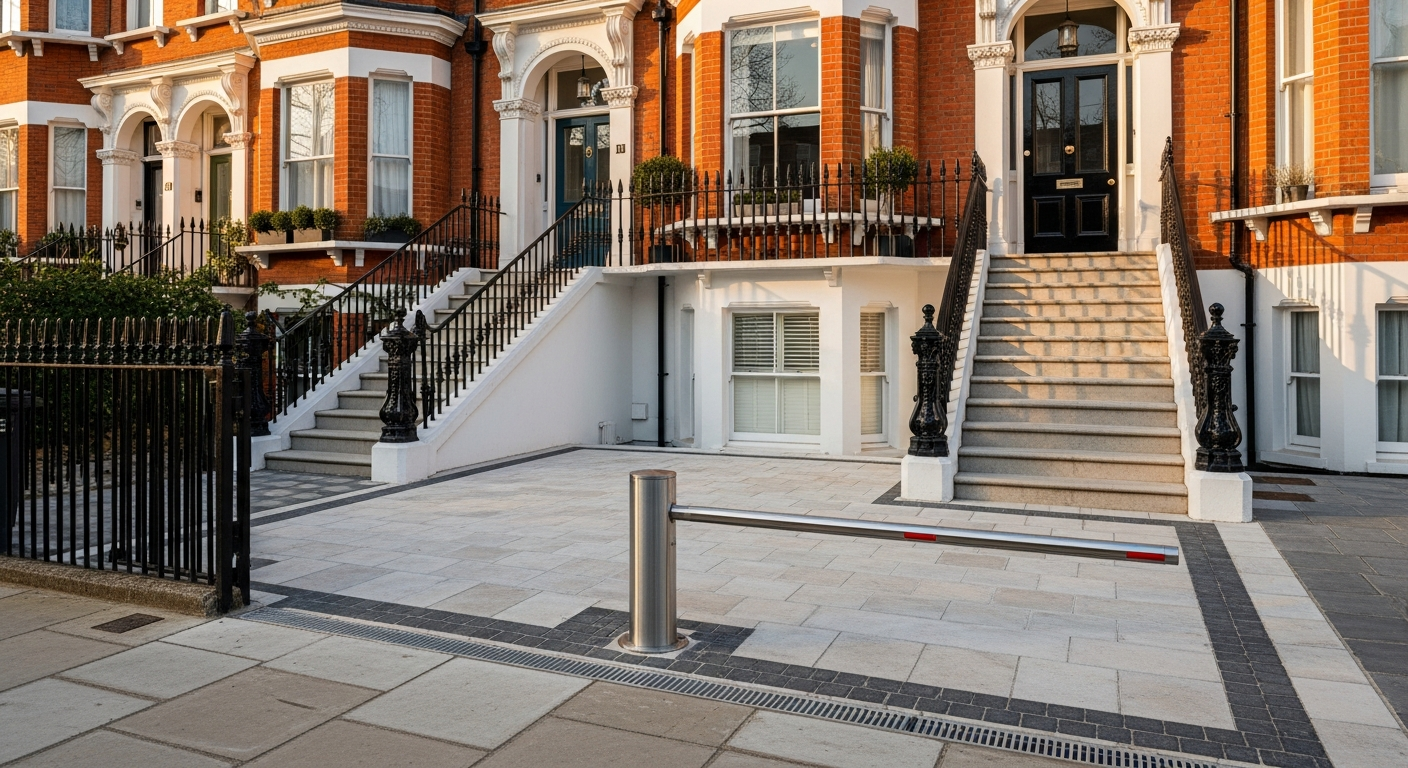
Short answer: in most cases, no. If you own the land your driveway sits on and the bollards stay under 2 metres in height, you can install driveway bollards without applying for planning permission. The exceptions are listed buildings, conservation areas, shared driveways, and any installation that crosses onto public footpath or highway land.
That covers about 90% of London homeowners. The remaining 10% — and the detail behind those rules — is where people get caught out, so it's worth reading the full guide before you book an installer.
When You Don't Need Planning Permission
For the vast majority of London driveways, security bollards fall under what's called permitted development. That means the government has already pre-approved the installation, and you don't need to involve your local council at all.
You're free to install driveway bollards without planning permission if all of the following apply:
- You own the freehold of the property (or you have written permission from the freeholder)
- The bollards are entirely on your own land — not crossing the pavement or public road
- The bollards are under 2 metres tall (or under 1 metre if they're directly adjacent to a highway)
- Your property isn't listed and isn't in a conservation area
- The driveway isn't shared with another household
If you tick all five boxes, you can go ahead. No paperwork, no waiting, no council fees. A typical install in this category costs between £400 and £2,000 in London depending on the type of bollard — telescopic, automatic, or fold-down — and takes one to two hours on the day.
When You Do Need Planning Permission
There are five specific situations where you'll need to apply to your local council before installing.
1. Listed Buildings
If your home is a listed building, you need Listed Building Consent before any external alteration — including a driveway bollard, even a small one. This applies whether your property is Grade I, Grade II*, or Grade II.
London has a high concentration of listed buildings, particularly in central boroughs like Westminster, Camden, Kensington and Chelsea, Islington, and Hackney. If you're not sure whether your home is listed, you can check the Historic England National Heritage List for free in about thirty seconds.
The application process for Listed Building Consent typically takes 8 weeks and is free, but a refusal is genuinely possible — councils take the visual integrity of listed properties seriously. Working with an installer who has experience handling listed properties (and can supply photos of bollards installed at similar properties) makes approval significantly more likely.
2. Conservation Areas
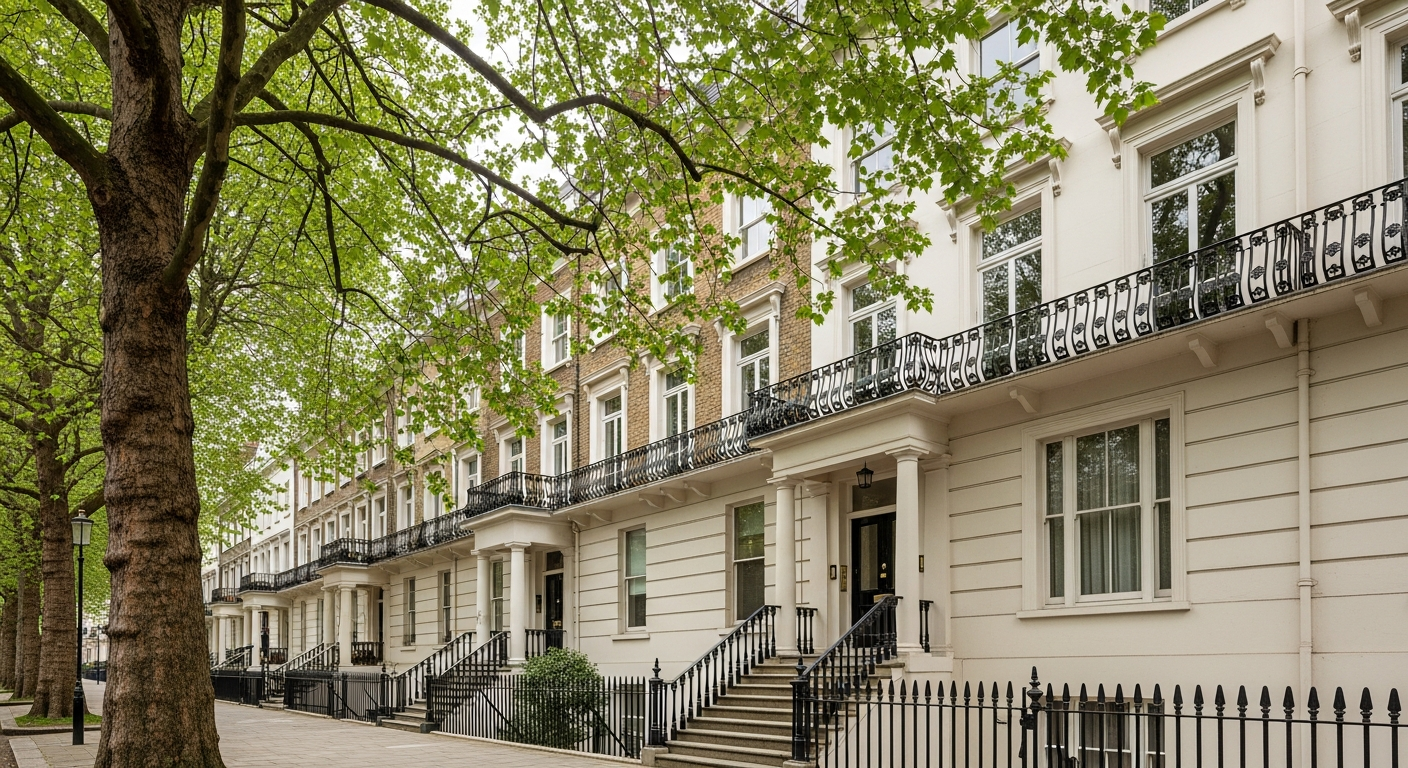
Conservation areas are protected for their architectural or historic character. London has more than 1,000 of them, covering large parts of every borough — Hampstead, Highgate, Chelsea, Greenwich, Dulwich, Blackheath, Bedford Park, and dozens more.
In a conservation area, you don't always need full planning permission for a driveway bollard, but your council may have introduced an Article 4 Direction that removes permitted development rights. The only way to know for certain is to check with your local planning department — most boroughs have a postcode-search tool on their website that tells you in under a minute.
If permission is required, the bar to clear is whether the bollard "preserves or enhances the character" of the area. Stainless steel telescopic bollards in a flush-mounted finish almost always pass this test; brightly coloured or industrial-looking installations sometimes don't.
3. Bollards That Cross Onto Public Land
This is the rule that catches the most people out. If any part of your bollard installation extends onto the pavement, the public highway, or a verge that the council maintains, you need planning permission and highways consent — and in most cases you won't get it.
The boundary between your property and public land is rarely where homeowners think it is. The pavement nearly always belongs to the council, and the verge or grass strip in front of your wall often does too. Before installing, check your title plan (available from the Land Registry for £3) to confirm exactly where your land ends.
If you want to put a bollard on the public side of your boundary — for example, to stop people parking across your dropped kerb — you'll need to apply for a vehicle crossing licence and bollard installation through your borough's highways department. This is a separate process to planning permission, costs £200–£500 depending on the council, and can take several months.
4. Shared or Joint-Access Driveways
If your driveway is shared with a neighbour, or if the access is governed by a right of way set out in your deeds, you'll need the written consent of every other party with rights over that access before you install. This isn't strictly a planning permission issue — it's a legal one — but the practical effect is the same: you can't install without agreement.
If you go ahead without consent, your neighbour can apply for an injunction to have the bollards removed, and the courts routinely grant these. Get the agreement in writing first, ideally as a deed of variation, and keep a copy.
5. Leasehold Properties
If you're a leaseholder rather than a freeholder, you don't own the land your driveway sits on — the freeholder does. That means even when planning permission isn't required, you'll still need the freeholder's written consent before installing a bollard.
Most flat owners with allocated driveway spaces fall into this category. The process is usually straightforward — a short letter to the managing agent, often a small administration fee — but it can take a few weeks, so factor that into your timeline.
Borough-by-Borough Notes for London Homeowners
Every London borough has slightly different planning policies, but for driveway bollards on private freehold property the broad rules are the same across all 32 boroughs and the City of London. Where they diverge is in conservation area coverage and Article 4 Directions:
- Highest conservation area coverage (most likely to need a planning check): Westminster, Kensington and Chelsea, Camden, Islington, Hackney, Hammersmith and Fulham, Richmond upon Thames
- Significant conservation coverage in pockets: Wandsworth, Lambeth, Southwark, Greenwich, Lewisham, Haringey, Barnet, Ealing
- Lower conservation coverage (most installations are straightforward permitted development): Bexley, Havering, Hillingdon, Sutton, Croydon, Bromley, Redbridge, Newham, Waltham Forest, Enfield, Brent, Hounslow, Harrow, Merton, Kingston upon Thames
This isn't a hard rule — every borough has at least some conservation areas — so always check your specific postcode with your council's planning portal before booking.
What Bollard Height Actually Means in Practice
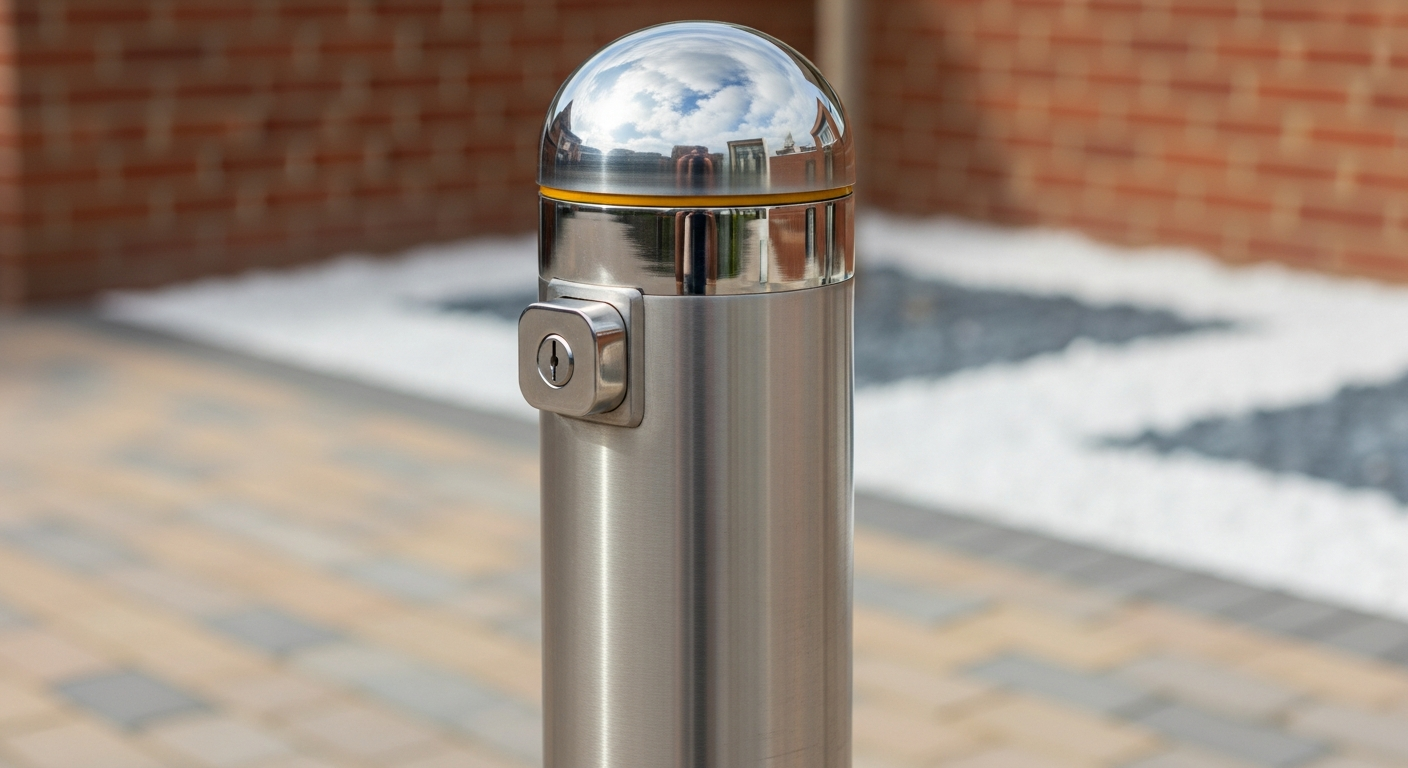
The 2-metre rule (or 1 metre adjacent to a highway) is measured from ground level to the top of the bollard when it's in the raised position.
For driveway use, this is rarely a constraint. A typical telescopic driveway bollard sits between 500mm and 800mm above the ground when raised, and entirely flush when lowered. Automatic and fold-down bollards are similar. The 2-metre limit really only becomes relevant for commercial or industrial bollards, which aren't suitable for residential driveways anyway.
How to Confirm You're Clear to Install
The fastest way to confirm your driveway bollard installation doesn't need planning permission is a three-step check:
- Check the Historic England listing register — takes 30 seconds, confirms whether your property is listed.
- Search your borough's planning portal for your postcode — every London borough offers this free online. You're looking for "conservation area" or "Article 4 Direction" flags.
- Check your title deeds — for shared access, leasehold restrictions, or unusual covenants. If you don't have a copy to hand, you can download it from the Land Registry for £3.
If all three come back clear and your bollard sits entirely on your own land, you're free to install. No application, no waiting, no fees.
The 24-Hour Installation Question
A lot of London homeowners want bollards installed quickly — often after a near-miss with car theft on their street, or because nuisance parking has finally tipped over the edge. The good news is that for the 90% of installations that don't need planning permission, "next-day" really is realistic. At Prestige Bollards we routinely take a WhatsApp enquiry in the morning and have the bollard fitted the following day.
For the 10% that do need permission — listed buildings and protected conservation areas, primarily — the timeline is longer (typically 8 weeks for Listed Building Consent), but we can advise you upfront on whether your installation is likely to be approved and help you put together the supporting photos and specification a council application needs.
Read next
- How much does bollard installation cost in London?
- Telescopic vs automatic bollards: which is right for you?
- Browse our driveway bollard range
Get a Quote in Under 5 Minutes
If you've checked the rules and you're clear to install, we can give you a fixed price in minutes — just send us a photo of your driveway on WhatsApp. No obligation, no follow-up calls, no surveyor visit needed for most jobs.
WhatsApp Prestige Bollards — average response time under 5 minutes.
This article is for general guidance only and doesn't constitute legal or planning advice. Planning rules change and individual cases vary — always confirm with your local council before installing if you have any doubt.